Insurance behemoth Life Insurance Corporation of India (LIC) is the fourth largest insurer in the world, according to a ranking based on life and accident & health reserves of companies in 2022 by S&P Global Market Intelligence. The state-owned insurer is ranked after Allianz SE, China Life Insurance Company, and Nippon Life Insurance Company. According to the report, LIC's reserves stood at $503.7 billion. Germany's Allianz SE ($750.20 billion), China Life Insurance Company ($616.90 billion) and Nippon Life Insurance Company ($536.80 billion) are the top three insurance companies in the world.

'We started affordable housing loans that has good traction and the books have grown to Rs 750 crore as of the end of last quarter.'

The Union finance ministry will meet CEOs of public sector banks to discuss issues related to cybersecurity in the wake of the Rs 820 crore (Rs 8.2 billion) fraud that hit Kolkata-based UCO Bank last month.

Co-lending deals between non-banking financial companies (NBFCs) and banks are likely to rise after the Reserve Bank of India's (RBI's) decision to increase the risk weight on consumer credit, industry leaders and experts say. Smaller NBFCs, they add, may increasingly opt for co-lending as capital markets could become costlier for them. "Smaller NBFCs will be more comfortable with co-lending because they are geography-specific in terms of industry or customers.

High-value insurance policies experienced muted growth in the first six months of the current financial year after the Centre decided to tax such products in this year's Budget. Simultaneously, there has been a marked improvement in the growth of policies with premiums of 'less than Rs 5 lakh', mainly originating from smaller cities. During this year's Budget, Finance Minister Nirmala Sitharaman proposed that insurance policies (excluding unit linked insurance plans or ULIPs) with an aggregate premium exceeding Rs 5 lakh, and the maturity amount, would not be exempt from tax.

Between March 2022 and September 2023, HDFC Bank added 56,310 employees.

General insurance companies are likely to see a surge in demand for health insurance in the coming months due to falling air quality in the country. The health insurance segment has registered a strong growth after the pandemic due to higher awareness. In the first half of financial year 2023-24, the segment grew by 24.4 per cent to Rs 54,713.52 crore from Rs 43,981.54 crore in H1FY23, driving growth of the non-life insurance industry.
'Pandemic has triggered interest and awareness among the people about the need for healthcare.'

'We are focused on playing on our strengths, which are technology, and building a large profitable business by working with banks as well as non-banks and NBFCs for loans.'

Sashidhar Jagdishan, managing director and chief executive officer of HDFC Bank, the largest private-sector lender of the country, has just completed his first term. The period October 2020-October 2023 was a roller coaster, and the second one, which started on October 27, could be more interesting as the lender absorbs the impact of the merger of HDFC, which was integrated on July 1, and moves to the next growth phase. Soon after he took over the reins from Aditya Puri on October 27, 2020, the Reserve Bank of India (RBI) debarred HDFC Bank from enrolling new credit card customers and launching new products under the Digital 2.0 programme due to repeated outages on its mobile-banking and internet-banking platforms.

In a move to strengthen governance in private sector banks and wholly-owned subsidiaries of foreign banks, the Reserve Bank of India (RBI) on Wednesday directed them to have at least two wholetime directors. Lenders that do not meet the requirement will have to submit the names for the RBI's approval within four months. Banks need prior approval from the banking regulator for the appointment of wholetime directors.

'Data-dependence means you can raise or drop rates. The present stance is only for raising rates.'
The share of Life Insurance Corporation of India (LIC) in monthly new business premium (NBP) in the life insurance sector declined to 58.50 per cent in September 2023 from 68.25 per cent in September 2022 -- a drop of 975 basis points -- owing to shortcomings in the product and distribution side of business. However, the market share saw a marginal uptick from the 57.37 per cent recorded in August this year. According to the monthly business data released for September 2023 by the Life Insurance Council, the NBP of LIC up to September 2023 stood at Rs 92,462.62 crore as compared to about Rs 1.25 trillion in the same period a year ago.
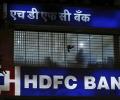
HDFC Bank has reshuffled the portfolios of its senior management team. This is the first major rejig after the amalgamation of HDFC Ltd on July 1. "The runway for our growth is large. This change is being done to bring in a very sharp focus on leveraging what we have built and for enhanced execution," said Sashidhar Jagdishan, managing director and chief executive of HDFC Bank, explaining the reason for this overhaul.

The average ticket size (ATS) of all transactions on United Payments Interface (UPI) in H1 2023 was pegged at Rs 1,604, marking a 10 per cent decline, compared to Rs 1,774 in H1 2022, according to data from Worldline India's Digital Payments Report. The reduction in the overall ATS on UPI is a good sign, suggesting a deeper embedding of UPI as it is being used for smaller or micro-transactions, and the dip is driven by the growth in person-to-merchant (P2M) transactions, the report said. The ATS of P2M transactions dipped 21 per cent from Rs 839 in H1 2022 to Rs 659 in H1 2023.

The currency in circulation (CIC) declined in the first half of this financial year and this is the first time this has happened in H1 in at least 10 years. The CIC on March 31, 2023, was Rs 33.78 trillion, which fell to Rs 33.01 trillion on September 22 -- a difference of about Rs 76,658 crore. In the first half of the last two financial years, the CIC went up by Rs 33,357 crore in FY23 and Rs 84,978 crore in FY22.

Debit card payments remained sluggish due to the surge in digital transactions after the pandemic, and the Unified Payments Interface (UPI) has emerged as the most popular mode of money transfer, particularly for small value transactions, according to RBI data. In July 2020, the total debit card spends stood at Rs 2.81 trillion, as compared to Rs 3.15 trillion in July 2023, reflecting a growth of 11.96 per cent. UPI spends have seen a whopping growth of 428 per cent, zooming from Rs 2.90 trillion to Rs 15.33 trillion during the same period, the data revealed.

Outward remittances under the Reserve Bank of India's (RBI's) liberalised remittance scheme (LRS) surged by 50.64 per cent to $9.1 billion in the April-June quarter (first quarter, or Q1) of 2023-24 (FY24), driven by healthy growth across segments due to a revision in the timeline of tax collected at source under the LRS scheme and normalisation in international travel. Major drivers include equity and debt investments, deposits, and the international travel segment, among others. According to the latest RBI data, the amount remitted under LRS stood at $9.1 billion in Q1FY24, compared with $6.05 billion in the same quarter last year.

The sons learned that they had been completely disinherited and that Surinder Kanwar's new wife would inherit everything.
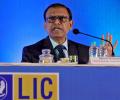
'At the policy's maturity, the total premium is refunded.'
 © 2026 Rediff.com - Advertise with us - Disclaimer - Privacy Policy - Sitemap - Feedback - About us - Terms of use - Grievances